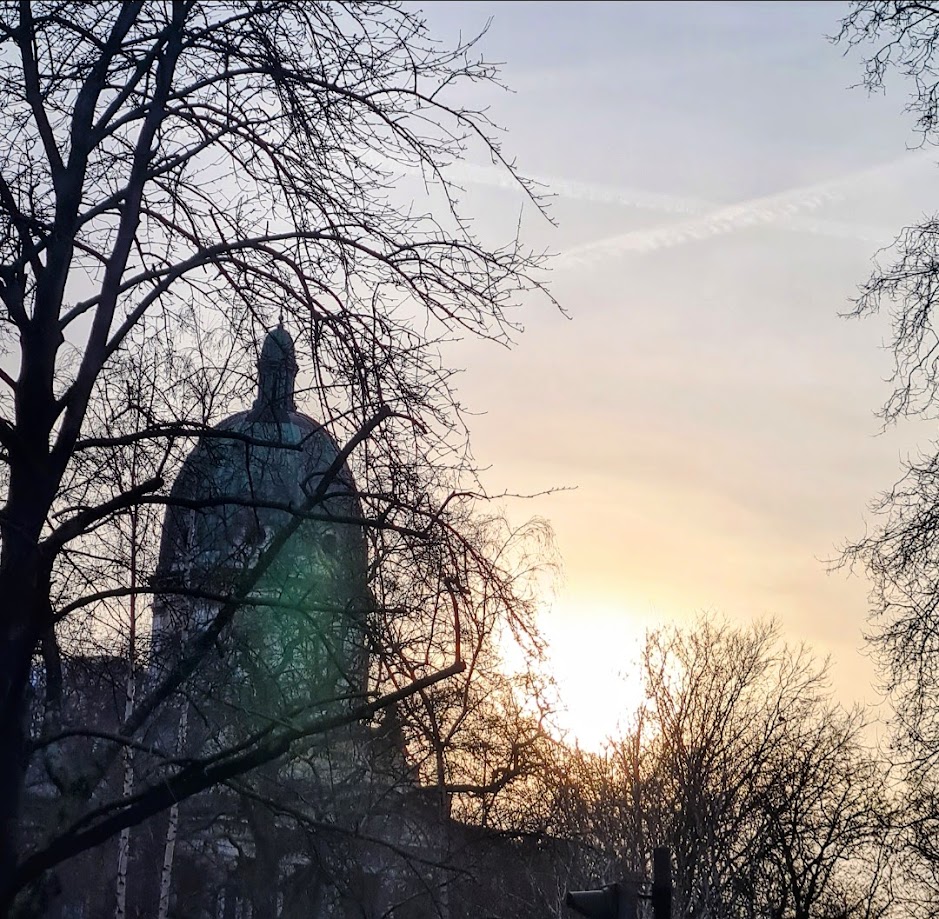
As part of my rediscovery of my love for museums, I’m embarking on a bit of a project to try and visit more of them this year – and beyond (because, let’s face it, it’s going to take me a lot longer than a year to get through them all). To prove to myself that I’ve actually been to them, I’m going to do a little bit of a review of each one as I visit. This is the first one – and where better to start than my long-time favourite museum, the Imperial War Museum, London. I paid my first visit aged about 11, after the delights of Horrible Histories ignited a lifelong interest in WW2 history, and my mum thought she might as well nurture it. I’ve been a couple of times with school since then, but this was my first time as an adult.
The basics:
IWM London is on Lambeth Road, about halfway between Lambeth North and Elephant & Castle tubes. Entry is free.
The good…
On this visit, I decided to start from the top (well, almost, as I discovered later) and work my way down. I began with the Blavatnik Art, Film and Photography Galleries, a series of galleries focusing on how modern (20th Century onwards) warfare was captured through art, film and photography. Honestly, I could have spent the whole day here and not got bored. There was such a rich variety of pieces and perspectives on display, from colossal paintings to handwritten notes and everything in between.
Unsurprisingly, I was most taken by some of the World War 2 art produced on the home front – but there was something really striking about seeing those paintings and sketches displayed alongside photographs from conflicts within my lifetime. The way the galleries were presented told a story that flowed really well, with every section building on the previous one to build up a powerful picture.
The only other display I managed to get to this time around was The Holocaust Galleries. My main take-away was that the gallery was incredible in just about every sense of the word. I won’t go into the story of the atrocities here, but as someone who spent about five years studying this aspect of history – including having the privilege of hearing firsthand from a survivor – I hadn’t realised quite how much I still didn’t know. In hindsight it seems like an obvious and quite silly thing to say, but it hadn’t occurred to me how different it is looking at things in textbooks, or on a TV screen, to seeing the objects in reality.
The galleries take you through the whole story, from the end of World War One and the Weimar Republic, through the escalation of violence, to the liberation of the camps, the Nuremberg trials and beyond. The way you’re led through the story, with film, light and sound as well as the displays themselves, is incredibly powerful, and gets the tone exactly right: it’s immersive, without being tacky or showy.
There’s such a huge array of objects in the collections – and I can’t fully articulate how jarring it is to come face-to-face with some of the insignia, the uniforms and propaganda posters that I thought couldn’t shock me. The most moving aspects for me were the small, everyday, personal objects: the toys, the shawls, the shoes along with the stories of the people they once belonged to.
It’s such an important exhibition, that’s been put together in an incredibly sensitive and powerful way, and it’s stuck with me ever since.
Another notable tick in the ‘good’ box was for access. There was plenty of seating dotted around both inside and outside the galleries themselves, as well as portable stools for visitors to take around with them. There are plenty of lifts, a well-signposted Quiet Room, tactile objects in some of the galleries as well as large print and braille guides readily available – and all in all, it gave the impression of being well planned out, and wanting to make things as straightforward as possible for anyone who might have access needs.
The bad…
Based on what I’ve seen, there aren’t any bad points. I did visit on a Saturday, and so it was very busy – especially in the Spies, Lies and Deception exhibition. As a major London museum, it’s inevitable that it will be busier at weekends and in the school holidays, so it’s not exactly a failing on IWM’s part. I did a very quick whiz through Spies, but it was virtually impossible to see any of the labels on the exhibits, so I settled on trying again on a quieter day, with a view to covering the galleries I didn’t get a chance to visit.
Which brings me on to…
Things I didn’t get to see…
There’s so much packed into the building, I only managed to cover off a floor and a half out of five levels in my three-hour visit. I’m already planning a return trip (or two, if I’m being realistic) so I can cover the remainder – the First and Second World War Galleries, Turning Points: 1934 – 1945, Peace and Security: 1945 – 2014 and the Lord Ashcroft Gallery. I also want to properly check out the Spies, Lies and Deception exhibition (which closes on April 14th, so I’d better get a move on).
I also didn’t get a chance to check out the cafe (it was far too crowded), or the gift shop (ditto), so I can’t comment on those. Which is a shame, because I love a museum gift shop.
So…is it worth the trip?
Even though I covered less than half of the exhibits during my visit, it’s a big yes from me. It’s not easy subject matter by any stretch of the imagination, but everything was put together so sensitively. The collections I saw got the balance just right; they didn’t shy away from the awful realities of conflict, without being gratuitous for the sake of it.
There’ll definitely be a part 2 when I’ve managed to make my return visit.
The small(ish) print: This is one in an occasional series of reviews of places I’ve visited under my own steam, with my own money. I’ve done my best to make sure everything’s accurate at the time of writing, and all the opinions are mine.
 Stephanie Franklin
One response to “IWM London review: Is it worth the trip?”
[…] staff checking tickets recommended starting from the top, and working my way down. As you know from my IWM review, I’m a fan of a top-to-bottom route anyway, so that’s exactly what I […]
LikeLike