-
London Transport Museum review: Is it worth the trip?
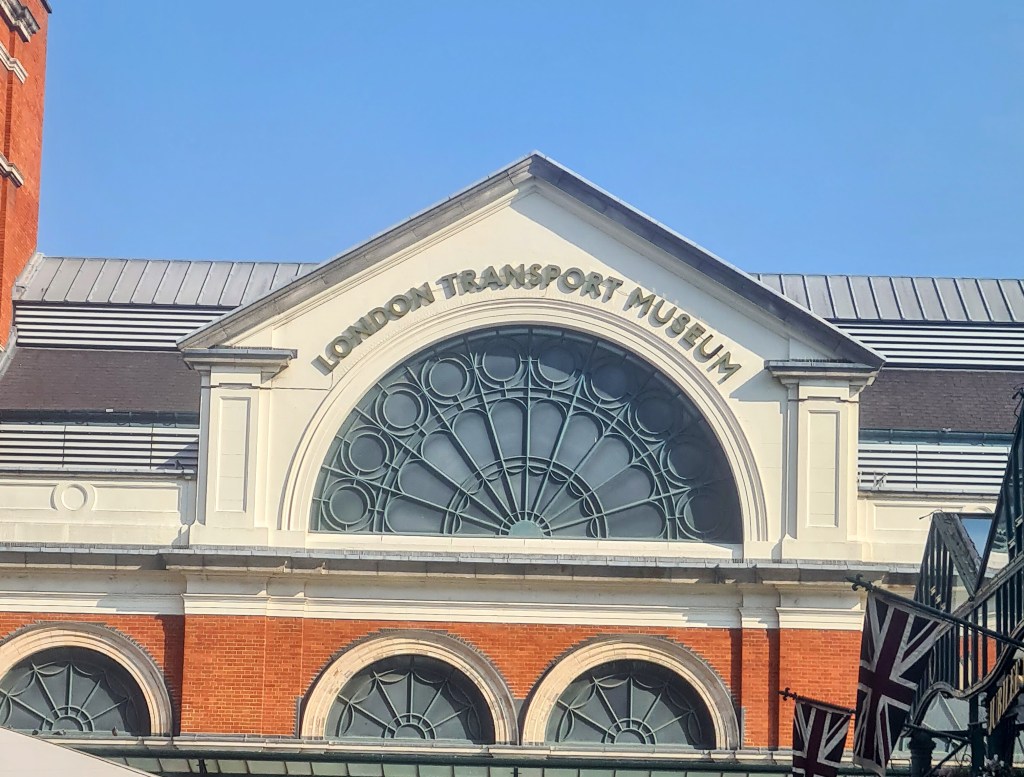
The London Transport Museum* has been on my bucket list for quite some time. Social and cultural history is probably my biggest area of interest when it comes to history – and there isn’t much else as intertwined with London’s social and cultural history as its transport system.
As a serial looker-upper when I’m out and about anywhere (with my apologies to anyone who has ever tried to travel with me on a tight schedule), the design and architecture of the tube has also fascinated me since I was a child. Add in a dollop of “Victorian things that aren’t the spinning jenny” and the promise of some rich World War 2 stories, you’ve basically got Steph’s Perfect Museum.
My visit was an unplanned addition to the touristy day I treated myself to a few weeks ago; I’d initially planned to focus on the free things to do, before I moved onto the visits I’d have to pay for. A series of fortunate events, however, changed my mind – and having tired of my first stop much earlier than I expected, and realising LTM was only a ten-minute walk away, I thought it was worth the ticket price.
Without spoiling the review before I’ve even started, I fear this little detour has sparked a new level of interest that is going to last quite some time.
*hereafter referred to as LTM, because I’m far too lazy to type it out in full every time.
The basics:
LTM is right in the middle of Covent Garden (TfL zone 1), and is open daily. Entry is £24 for an adult ticket, but that effectively acts as an annual pass and gets you unlimited access for a year.
The good…
The “feel” of the place was far nicer than any other London museum I’ve ever visited. The staff are absolutely wonderful, and I got the impression from everyone I came into contact with that they really enjoyed being there. It felt like a museum run by Museum People (in contrast to some of the bigger London sites, where the general feeling is – understandably – more of security and crowd control than history and/or subject enthusiasts).
There are tiny bits of attention to detail dotted throughout which are nothing short of delightful – from the presence of this miniature dog barking at the horses in a model of a 19th Century horse bus, to the moquette decals on the bathroom doors (I was tempted to take a snap, but didn’t want to get escorted off the premises for being weird, so I resisted).
And that’s before we really get into the exhibits. This post is already a lot longer than I’d planned, so take a deep breath because I’m about to give you a real whistle stop tour.
When I arrived, the lovely member of staff checking tickets recommended starting from the top, and working my way down. As you know from my IWM review, I’m a fan of a top-to-bottom route anyway, so that’s exactly what I did.
We start off in the 19th century with the “origin story” as the horse and cart, sedan chair and watermen on the river gradually give way to horse buses, trams and the railway. Along with the aforementioned excellent tiny dog, there are heaps of models, replicas and real artefacts from the time, along with some jumpscare-inducing life sized model people occupying various of the cabs and carriages. I got the distinct feeling I was being watched as I went around…
From there, we head down (both figuratively and literally) to look at the construction of the underground, how they solved the problem of where to put the steam, and tragedies that struck along the way, before London started expanding even more rapidly and we head into The growth of London. This floor is a real treat; there are replica trains and a huge array of posters, tickets and other memorabilia that really brings the story to life as the city blossomed into what we know today.
Next up is the Global Poster Gallery which, as the name suggests, is all about posters. It’s a fascinating look through over a century of posters, exploring how (and why) they were commissioned and designed, as well as comparing and contrasting some of the artwork with the final finished objects. It’s visually arresting, and feels like a real celebration of an iconic part of London’s history.
I learned SO MUCH I didn’t know before about the history of TfL and its predecessor, as well as the history of London as a city – and I was completely charmed while I was doing it. There were so many lovely touches throughout, including a series of labels highlighting the role of women – particularly in the early days when there were far fewer of them in the workplace, and especially in transport. It felt especially pertinent for a visit on International Women’s Day, but it’s nice to see that it’s part of the regular display rather than a token add-on.
One real stand-out among the exhibitions was Echoes of the Blitz, a photo gallery showing people sheltering in 1940s tube stations alongside people doing the same in modern-day Ukraine. The similarities between the sets of images were striking, and a poignant reminder that, for so many people, war isn’t a distant memory, or something we read about in history books. It’s a testament to people’s resilience in the face of truly horrific circumstances, and the fact that the everyday things – sleeping, eating, music, doing your hair – keep going. Echoes of the Blitz runs until Spring 2025, and I’d really recommend taking a look before it’s gone.
Did I mention that the whole museum was great? Along with the staff and the attention to detail in the exhibits, the route told a wonderfully coherent and engaging story, culminating in a celebration of the present and a look to the future. I left feeling surprisingly hopeful.
And finally…the gift shop. My energy levels were flagging by this point, so I didn’t spend long exploring, but there was an impressive range of stuff to buy, and what looked like a good range of price points. I’d say I was proud of myself for not buying anything (the tote bag doesn’t count, it was a practical necessity and I bought it before I arrived), but we all know that won’t happen again.
The bad…
There’s not a lot to say here (though the preschooler I spotted having a tantrum because there simply were not enough buses might beg to differ) – and, at least, nothing that truly counts as bad. There are a couple of areas where things could be improved slightly, so what follows are the result of me being very picky (who? me?). And, in fairness, there were quite a lot of buses, actually.
My main frustration is with what would probably have been my favourite exhibition, if I’d been able to see it properly. London by Design takes you through the story of how some of the most iconic London transport designs came to be. There are tiles, there’s moquette, there are tube maps, there’s plenty of Johnston typeface, and of course the roundel. It’s right up my street, it’s absolutely fascinating stuff, and there’s a huge volume of content packed into a very small space.
So why’s it ended up in the Bad Place? One word: Lighting. It’s housed in a boxed-off area on the ground floor, and the lighting levels in the whole “box” are really quite low. There are some cool light projections of posters running across the floor, but I’d swap them in a heartbeat for being able to see properly.
The cases are lit, but not super brightly, so it’s still tricky to see detail in some of the displays. Which, in an exhibition about design, where the visual details are absolutely the key, is a bit of a problem.
Because there’s so much packed into a small space, there are a lot of labels, and trying to match the label to the exhibit is a harder game than usual when you’re playing it in the twilight. I can’t be certain, but I assume the lighting levels are to help preserve the exhibits and stop them fading. But if you’re going to tease me with me tiles, light them properly so I can really appreciate the colours (and the Sherlock Holmes patterns)!
With my accessibility hat on, there’s a definite need for more seating, especially on the upper floors. The gallery spaces are quite narrow, and there’s so much packed into them that space is limited, but one or two seats at either end would be very welcome (and the design possibilities are endless: recreating some of those Victorian wooden seats? Spot-the-moquette? It would be GLORIOUS).
Because the museum is housed in a former Victorian flower market, and is all in one fairly open space, it does get quite noisy. It wasn’t all that busy when I was there (on a weekday afternoon in term-time), but the volume was still quite a lot to contend with. The Global Poster Gallery, as I’ve already mentioned, was an oasis of calm in the middle of everything with its slightly lower lighting and separation from the noise of the main space. It just needed a couple of seats…
Having said that, I do want to point out that it’s clear from both the museum itself, and the amount of information on their website, that there’s a big focus on accessibility – including running events for SEN families before and after hours, where everything is designed to be quieter. There’s also a video tour of the museum, as well as a visual story, and they have sensory bags available onsite. And actually, they’ve done a phenomenal job overall, given the limitations of the space. They’ve gone out of their way to make it as accessible as possible, and it’s definitely one of the more neurodivergent-friendly tourist spots I’ve visited in London.
One final thing, which is more of a wishlist item than a criticism: I’d love to have the option of a guided tour of the museum itself (there are tours of the Acton depot available, and the museum also runs the Hidden London programme, but I couldn’t find any options for tours of the main museum). There were so many questions I could have asked, about pretty much everything I saw, and having a guide there to flesh out the labels would have enriched everything even more. Though, given how many questions I’d have asked, it’s probably a mercy for the staff that they don’t offer tours. It’s entirely possible I’d still be there asking things now…
Things I didn’t get to see…
I managed to cover about ¾ of the museum in just under three hours. I’d slightly run out of steam (insert train joke here) by the end, so I missed a few bits on the ground floor: the Legacies: London Transport’s Caribbean Workforce, Time is Running Out and the On the Surface exhibits will have to wait for next time. I also didn’t spend enough time in Digging Deeper or The formation of London Transport to really do them justice. If you’re planning a day trip and want to cover the whole thing, I’d suggest you allow at least four hours, plus extra time for the gift shop and café, if those are your bag.
I also didn’t get a chance to visit the Canteen – but having looked at the menu since, I’m going to have to fix that next time I go.
So…is it worth the trip?
If you haven’t worked it out by now, yes. Very definitely yes. And a bit more yes. The few small frustrations absolutely weren’t enough to dampen my enjoyment – I had a great afternoon’s visit, and now I’ve been once and know what to expect, I’ll be prepared for the seating, and the noise levels. I’ll be going back fairly soon to cover off the last few exhibits I missed, so there might well be a mini part 2 in the coming months. And I’ve already got my eye on one of the Acton depot tours for later in the year…
The small(ish) print: This is one in an occasional series of reviews of places I’ve visited under my own steam, with my own money. I’ve done my best to make sure everything’s accurate at the time of writing, and all the opinions are mine.
-
IWM London review: Is it worth the trip?
As part of my rediscovery of my love for museums, I’m embarking on a bit of a project to try and visit more of them this year – and beyond (because, let’s face it, it’s going to take me a lot longer than a year to get through them all). To prove to myself that I’ve actually been to them, I’m going to do a little bit of a review of each one as I visit. This is the first one – and where better to start than my long-time favourite museum, the Imperial War Museum, London. I paid my first visit aged about 11, after the delights of Horrible Histories ignited a lifelong interest in WW2 history, and my mum thought she might as well nurture it. I’ve been a couple of times with school since then, but this was my first time as an adult.
The basics:
IWM London is on Lambeth Road, about halfway between Lambeth North and Elephant & Castle tubes. Entry is free.
The good…
On this visit, I decided to start from the top (well, almost, as I discovered later) and work my way down. I began with the Blavatnik Art, Film and Photography Galleries, a series of galleries focusing on how modern (20th Century onwards) warfare was captured through art, film and photography. Honestly, I could have spent the whole day here and not got bored. There was such a rich variety of pieces and perspectives on display, from colossal paintings to handwritten notes and everything in between.
Unsurprisingly, I was most taken by some of the World War 2 art produced on the home front – but there was something really striking about seeing those paintings and sketches displayed alongside photographs from conflicts within my lifetime. The way the galleries were presented told a story that flowed really well, with every section building on the previous one to build up a powerful picture.
The only other display I managed to get to this time around was The Holocaust Galleries. My main take-away was that the gallery was incredible in just about every sense of the word. I won’t go into the story of the atrocities here, but as someone who spent about five years studying this aspect of history – including having the privilege of hearing firsthand from a survivor – I hadn’t realised quite how much I still didn’t know. In hindsight it seems like an obvious and quite silly thing to say, but it hadn’t occurred to me how different it is looking at things in textbooks, or on a TV screen, to seeing the objects in reality.
The galleries take you through the whole story, from the end of World War One and the Weimar Republic, through the escalation of violence, to the liberation of the camps, the Nuremberg trials and beyond. The way you’re led through the story, with film, light and sound as well as the displays themselves, is incredibly powerful, and gets the tone exactly right: it’s immersive, without being tacky or showy.
There’s such a huge array of objects in the collections – and I can’t fully articulate how jarring it is to come face-to-face with some of the insignia, the uniforms and propaganda posters that I thought couldn’t shock me. The most moving aspects for me were the small, everyday, personal objects: the toys, the shawls, the shoes along with the stories of the people they once belonged to.
It’s such an important exhibition, that’s been put together in an incredibly sensitive and powerful way, and it’s stuck with me ever since.
Another notable tick in the ‘good’ box was for access. There was plenty of seating dotted around both inside and outside the galleries themselves, as well as portable stools for visitors to take around with them. There are plenty of lifts, a well-signposted Quiet Room, tactile objects in some of the galleries as well as large print and braille guides readily available – and all in all, it gave the impression of being well planned out, and wanting to make things as straightforward as possible for anyone who might have access needs.
The bad…
Based on what I’ve seen, there aren’t any bad points. I did visit on a Saturday, and so it was very busy – especially in the Spies, Lies and Deception exhibition. As a major London museum, it’s inevitable that it will be busier at weekends and in the school holidays, so it’s not exactly a failing on IWM’s part. I did a very quick whiz through Spies, but it was virtually impossible to see any of the labels on the exhibits, so I settled on trying again on a quieter day, with a view to covering the galleries I didn’t get a chance to visit.
Which brings me on to…
Things I didn’t get to see…
There’s so much packed into the building, I only managed to cover off a floor and a half out of five levels in my three-hour visit. I’m already planning a return trip (or two, if I’m being realistic) so I can cover the remainder – the First and Second World War Galleries, Turning Points: 1934 – 1945, Peace and Security: 1945 – 2014 and the Lord Ashcroft Gallery. I also want to properly check out the Spies, Lies and Deception exhibition (which closes on April 14th, so I’d better get a move on).
I also didn’t get a chance to check out the cafe (it was far too crowded), or the gift shop (ditto), so I can’t comment on those. Which is a shame, because I love a museum gift shop.
So…is it worth the trip?
Even though I covered less than half of the exhibits during my visit, it’s a big yes from me. It’s not easy subject matter by any stretch of the imagination, but everything was put together so sensitively. The collections I saw got the balance just right; they didn’t shy away from the awful realities of conflict, without being gratuitous for the sake of it.
There’ll definitely be a part 2 when I’ve managed to make my return visit.
The small(ish) print: This is one in an occasional series of reviews of places I’ve visited under my own steam, with my own money. I’ve done my best to make sure everything’s accurate at the time of writing, and all the opinions are mine.
-
A love letter to… museums
I really love museums.
This probably isn’t a surprising statement to read, given the title of this post. But it felt important to point out at the start.
I’m afraid I’m one of those tedious people who wanders slowly around, stopping to read every label, open every drawer, listen to every audio snippet on my way round. I always been; a voracious reader and inquisitive almost to a fault, it stands to reason that a giant building full of nothing but Things to Learn About would be paradise for me.
Living as close to London as I do also means that school coach trips into town to visit the Big Ones (by which I mainly mean the Natural History Museum) were the highlight of my years as a child. And I’m incredibly lucky to have grown up in a family who nurtured my seemingly endless quest for knowledge, and took me to museums themselves when they could.
When I go on holiday I always try and hunt out a local museum or exhibit to explore – often purely inspired by passing a brown road sign on my travels. I’m not really that fussed about what the collections are about – part of the delight of them is discovering an interest in something I never knew I could care about (tiles, anyone?).
From the Mechanical Music Museum in Gloucestershire (which sadly closed in 2019) to the Walsingham visitors’ centre and the seemingly endless places that form part of the Ironbridge Gorge museums in Shropshire, I’ve seen some real gems.
Other than the fact it gives me an opportunity to learn something new about something, there’s also something incredible about sharing a space with everyday objects that belong to an entirely different place and time. Discovering the myriad ways that my life isn’t all that different to the lives of people decades, centuries, even millennia ago. Seeing someone’s stuff elevated to almost sacred status, tucked away behind glass to be gazed at reverently. Even in the midst of Big Historical Events, there’s still the cooking utensils, the doodles, the clothes, the jewellery and the reminders that life always goes on.
But – other than my holiday exploring – I’ve rather neglected museum visits in my everyday life. There’s been a number of reasons, but I’ve realised over the past few months (in fact, since my visit to the aforementioned Ironbridge Gorge museums last summer) just how much I love them, and just how much I’ve missed them.
In my continued quest to re-discover long lost loves and things that used to bring me joy, I’m trying to change that. I’ve made a giant list of everything I want to see (yes, it’s a spreadsheet, of course it’s a spreadsheet), and I’ve already started working my way through. And it’s already been a joy. I’ve learned loads. I’ve already got a new favourite museum. And it’s giving me lots more things to write about, and an incentive to actually sit down and write about them.
I’ve got grand plans for the coming months – especially as we head towards summer and a wander across the city becomes a far more tempting prospect than it is in a cold, dark January. So, watch this space, I guess?
Got a museum you want to recommend? Somewhere you think I’d love, or you just want me to visit? Leave a comment below!
If you enjoyed this post, I’d really love it if you’d consider subscribing (it’s free!). You’ll get new posts straight to your inbox, I promise I’ll try and keep them interesting, and you can unsubscribe, or change your subscription settings, any time you want.
-
Things I loved in February
Well. Despite the efforts of leap-day to destroy me completely, we have made it to the end of February. I thought January was extra-January this year, then February came along screaming HOLD MY BEER, to really test my resolve.
I could succumb to the temptation to wallow in all the ways that this month has been, well, a bit crap, but I won’t. Nobody wants to read that, for a start. Suffice it to say that it’s been a month of two halves: it started very well – brilliantly, in fact – and then fell apart in the middle, and stayed that way.
Despite that, I’ve found, and done, and visited some things I loved. It’s been a month of building on things I’m rediscovering, and rediscovering some more (more on that, and my long, long road out of burnout, in a future post):
Life (St Martin-in-the-Fields, London).
February kicked off with my first Friday-night trip to London in a very long time (and my first trip to Trafalgar Square in even longer). I was there to see Life, a one-weekend-only, light-and-sound projection display at St Martin-in-the-Fields which I very nearly missed completely. I’m glad I didn’t.
It was mesmerising. It was thought provoking. It was weird, in places. But overall, it was beautiful – there’s something about the way the light projections and soundtracks played with the already-beautiful spaces (the church’s exterior, the crypt and, finally, the main sanctuary) that created something greater than the sum of its parts.
If it hadn’t already finished (sorry), I’d absolutely recommend it. It’s a follow-on from a similar installation that happened in 2023, so I’m very much hoping it’ll be back next year.
Emlyn: Suck it Up and Cry Yourself to Sleep (Oslo, Hackney)
Continuing February’s theme of “First-time-for-ages”, I went to an actual, real-life, gig. It’s been a really, really long time – but I picked a great show to re-enter the world of live music.
There’s something about those sweaty, small gigs in tiny rooms above pubs and bars that I love. They’re different from the massive stadium shows where everything is a spectacle, and the mid-sized venues where there’s plenty of people just there ‘for the vibe’. When you’re one of – at most – a couple of hundred people, all there because they love the artist, love the music, there’s a special kind of intimacy to it. And it feels even more unique, even more special, when it’s the artist’s first ever headline show in Europe – which was the case here.
Despite being a solid decade older than most of the crowd, it was an EXCELLENT evening. I’m a fan of Emlyn’s music anyway (not many things could persuade me to trek across to the other side of London on a Monday night in February, but she could), and the mix of feminine rage and raw emotion that she’s known for was an incredible thing to behold in person. The energy in the room was electric – I don’t think there was a dry eye in the room during What Happened to Maggie, I sobbed my way through 10, 20, 30, and screamed along to Temporary Funeral so hard it made my tummy hurt.
If I’m truthful, I screamed along to everything – I took so many videos during the show, but it wasn’t until I was watching them back on my way home that I realised my vocal additions had ruined every single one of them. Ordinarily, I’d link to a little clip here – but absolutely nobody needs to hear that.
Was it worth the covid that I caught at some point that night? I’m not sure, but probably, yes.
A short month, this month, and not all that many things to write about. But here’s hoping that March will be better, for all of us. I’ve got some fun plans, at least…
-
I just want to go to the theatre
I haven’t been to the theatre since 2018. Not because it’s expensive (it is), or because of Covid (which didn’t help, admittedly). Because I’m fat.
Last time I went to the theatre, it took a week for the deep bruises on my hips and thighs to fade. Weeks more for the pain in my knees, from them being jammed up against the back of the seat in front of me, to ease. Even longer for my spine to recover from having to twist myself into unnatural shapes, for fear of intruding on anyone else’s space.
I can’t accept a spontaneous invite, unless it happens to be somewhere I’ve been before. I can’t buy tickets on a whim. And I can’t take advantage of those last-minute cheap deals everyone else who visits the West End gets to enjoy. Can I go and support my friend in their show? Maybe, but only once I’ve done the research, and probably waited ages for a feeble response from the venue. If the tickets aren’t all gone by then.
Or maybe I can, but I’ve got to book box seats* (*restricted view, twice the price, and you’ll probably get neckache/get distracted watching what’s happening in the wings, because that’s 90% of what you can see) and maybe, if I ask nicely, turn around three times and say the alphabet backwards, they’ll rummage a chair out of a cupboard for me. It might not even be a broken one.
(Incidentally, I know this isn’t just a Fat People issue. Disabled access to so many public spaces – not just theatres – is a disgrace in so many places, and venues need to do better. But there are people far better qualified than me to talk about that.)
The thing is, I’m used to it. I’ve been navigating the world in this body since my teens. And it’s not just theatres. Theme parks, public transport, pubs, cafes – I could go on. And on. And on. It’s nothing new, and it isn’t just me. But this week – after a particularly egregious example of Bad Theatre Seating – something snapped. I’ve been dwelling on it for days.
One particular show, at one particular London theatre, has been popping up all over my social media for months now. Ads, everywhere, all the time. It looks great. An actor I love is playing the lead. It’s got good reviews. The story sounds brilliant. I so very nearly bought myself a ticket on a whim. My god, I’m glad I didn’t. The venue’s website didn’t give me what I needed, so I emailed. And waited. And waited. Eventually I heard back (maybe they had to send an intern off with a tape measure) – the width of the seats in the auditorium was…33 centimetres.
33cm. Only slightly bigger than the height of an A4 piece of paper. I’m starting to realise that the lack of information online may not have been an oversight.
It’s such a frequent occurrence for me that it’s usually water off a duck’s back. This time, though, it’s cut much deeper. I haven’t been able to get it off my mind – the mix of frustration, disappointment, shame, anger. It’s even been stopping me sleeping properly.
Why now? Why this time?
I’m not sure. Maybe it’s partly because it’s a play I really wanted to see. Maybe it’s because the size of the seat was so ridiculous, even by London theatre standards. Maybe it’s the straw that broke the camel’s back. Maybe I’m just in a bad mood. Either way, it’s really affected me, and I can’t shake it off even days later.
I don’t remember a time where I would have fit comfortably into a seat that was 33cm wide. A lot of my straight-sized friends said the same, after I shared the size chart online. Just who, exactly, is having a nice time in this theatre? Not many people, by the sounds of it. How many people are going there, only to have the same mortifying experience? The pain of trying to force your body into a space far too small for its size? The huffing and sighing and oh-so-pointy elbows of the strangers with the misfortune to be sitting in the next seat. The waves of white-hot shame because you just know everyone is looking at you, judging you, pitying you.
I’m waiting to hear if there’s a work-around, a way I might still be able to go. But none was forthcoming in the original reply, so I shan’t be holding my breath.
If you’re not fat, and you’re booking tickets for something, perhaps in future you might look out for whether the venue has published their seat dimensions. If they haven’t, you could ask them to. If you’re inviting us to go with you, maybe check that out first, so we don’t have to? And if you have the deep, deep misfortune to be sat next to a fat person in a theatre (or anywhere else, for that matter), could you try not to be an arsehole about it? Believe me, we’re far more uncomfortable than you are.
-
Appreciating the little things
One of the biggest things that came out of the pandemic for me was a renewed appreciation of life’s small joys. You know, the things that so often slip by unnoticed…until they’re absent.
Those old, familiar things that I missed so desperately when covid showed up and everything changed overnight. The new stuff I found, or learned, to fill the gaps lockdown created. And all the things I’ve discovered, or rediscovered, since then as I’ve started putting the puzzle pieces of Real Life back together, only to find they’ve made an entirely new picture now.
Sitting in coffee shops. Taking a spontaneous road trip. Blue skies, birdsong, beaches. Knitting. Watching sport. Eating ice cream in the cinema. Countless other things I won’t list here, because….spoilers.
It sounds twee, I know, but stopping to notice and acknowledge those little things makes my life feel richer somehow. And since I’ve been paying for this stupid domain since 2021 and done nothing with it, I’m creating a space to acknowledge them in writing.
Every week (give or take) I’ll celebrate one of those things here, in my “Love Letters to…” series. You can read my first one, a love letter to reading, here. I’d love to know if any of them resonate with you – or what yours are, if they don’t.
-
A love letter to….reading
A condensed version of this post first appeared on my Twitter and Instagram in April & May 2023
I have finally rediscovered my reading mojo!
As someone who would read anything and everything as a child, it’s been a source of near-constant anguish and frustration that I can’t seem to engage my brain in starting – let alone finishing – a book. Audiobooks have been my lifeline, but the experience just isn’t the same as losing yourself in a paperback, or the weighty feel of a hardback in your hands. There’s something magical about the smell of the pages, the smoothness of the cover – the promise of a key to another world, and all you need to do is open it up and dive right in.
I’ve bought plenty (okay, more than plenty – if truth be told, I’ve run out of bookshelf) but. I. Just. Cannot. Get. Myself. To. Read. Them.
Even when it’s time for bed, even though I know it’s one of the best things I can do to sleep.
Up until a couple of weeks ago, I’d managed to read a grand total of one book in the past….year? And, if I’m honest, that was mainly down to a very long coach journey.
But, a few weeks ago, a miracle occurred. I found THE book, the one that I wanted to be reading all the time. The one that made me restless whenever I didn’t have my nose in it. The one that almost felt like it was becoming an addiction.
I read it in cafes, with ice creams and coffees. I read it on sunny benches by the river. I read it in hotel rooms. I read it on garden benches. I read it leaning against a lamppost at the corner of the street (no, really, I did). I didn’t want to put it down.
I fell in love with the characters. I gasped, and laughed, and tutted as if I were there in the story. I got the ache of loss when it finished. I’ve still got the characters living rent-free in my head. I’ve been left craving more – needing to know where they all go next.
It turns out that what I needed more than anything was the right book to get my groove back and remember why I loved reading so much in the first place. It quiets my chaotic, ADHD brain in a way that nothing else can.
The feeling of peace was astonishing – even when the story felt far from peaceful. There’s something about the feeling of escape, of losing yourself completely in another world. When you first get caught up in the story and start tumbling down the rabbit hole, losing yourself in whatever new world the author has carved out for you, time slows down and you lose sight of everything else.
I’ve finished that book now, and moved on to another – a totally new place and time, utterly distinct turns of phrase, but still magical. Of course, as summer strolls lazily into view, it’s the perfect time of year to spend my free hours curled up, catlike, in the sun, with a book. But it’s a long-lost love that I plan to carry with me into the autumn, and beyond.
If you’d like to know more about my THE book, it’s The Cuckoo in the Nest, by Fran Hill (published by Legend Press) and – if I hadn’t already made it clear – I think it’s really excellent.
-
Subscribe
Subscribed
Already have a WordPress.com account? Log in now.
 Stephanie Franklin